HowtoCleanaResinFloor
How to Clean and Maintain a Resin Floor: A Professional Contractors Guide
As a specialist flooring contractor, one of the most common questions we are asked is: “How do I clean my resin floor?”
Resin flooring is widely used across commercial and industrial environments, from food production facilities and commercial kitchens to warehouses and manufacturing plants. However, cleaning requirements can vary depending on the flooring system, the environment and the type of finish installed.
In areas such as commercial kitchens, where slip resistance is an important consideration, resin flooring often incorporates a textured surface. While this texture provides the required slip-resistant properties, it can also make dirt, grease and other contaminants become trapped within the surface profile, meaning that simply using a mop and bucket may not provide a sufficiently thorough clean.
This does not mean that textured resin flooring is difficult to maintain. It means that the correct cleaning equipment, suitable cleaning solutions and an appropriate cleaning method are essential.
At MJF Group, we recommend following the relevant guidance from FeRFA (the Resin Flooring Association), alongside the flooring manufacturer's instructions, to ensure that resin floors are cleaned effectively and maintained correctly.
In this guide, we explain how to clean and maintain a resin floor, the equipment you may need and the steps you can take to keep your flooring in good condition.
1. Establish a cleaning routine that suits your environment
There is no single cleaning schedule suitable for every resin floor. The frequency and method of cleaning will depend on how the space is used, the amount of traffic it receives and the types of dirt or contaminants it encounters.
For example, a manufacturing facility may experience oil, grease, metal particles or residues from production processes. A commercial kitchen may require frequent cleaning to manage food residues and maintain hygienic conditions, while a warehouse may accumulate dust and debris from deliveries and vehicle movements.
FeRFA, the Resin Flooring Association, highlights the importance of selecting a cleaning regime that reflects the flooring system, the conditions of use and the type of soiling present.
Consider the following when planning your maintenance schedule:
• Daily cleaning: Remove loose dirt and debris, paying particular attention to entrances, walkways and busy working areas.
• Routine washing: Clean the floor at a frequency appropriate to the level of contamination and operational requirements.
• Periodic deep cleaning: Arrange a more thorough clean where dirt, grease or residues accumulate beyond what routine cleaning can remove.
A consistent schedule helps prevent contamination from building up and makes ongoing maintenance more manageable.
2. Choose cleaning products carefully
Using the wrong cleaning chemical can affect a resin floor's finish or performance. Products should always be compatible with the specific flooring system and the contaminants being removed.
For routine cleaning, a suitable low-foam, pH-neutral detergent is often appropriate, provided it is approved for the installed floor. More specialised contamination, such as grease or oil, may require a different cleaning agent.
Always follow the cleaning product manufacturer's instructions, including the recommended dilution and contact time. Using a stronger concentration does not necessarily improve results and may leave residues or damage the surface.
FeRFA also recommends considering whether a cleaning product is suitable for the particular resin finish. If you are unsure which product to use, consult the flooring manufacturer or specialist contractor before introducing it into your cleaning regime.
3. Use the right equipment for the floor finish
Cleaning a resin floor in a commercial or industrial environment does not necessarily require specialist machinery. In many cases, the equipment needed is similar to that used to maintain other hard flooring surfaces, such as vinyl or tiles. The important consideration is whether the equipment is suitable for the floor's texture, the level of contamination and the size of the area.
Depending on the flooring system and the cleaning requirements, the equipment may include:
• Wet vacuum: Used to remove dirty water and cleaning solution from the floor after washing, helping prevent residues from being left behind.
• Floor squeegee: Helps direct water and loosened dirt towards a suitable collection point for removal.
• Suitable cleaning solution: A compatible detergent selected for the type of contamination and used at the manufacturer's recommended dilution.
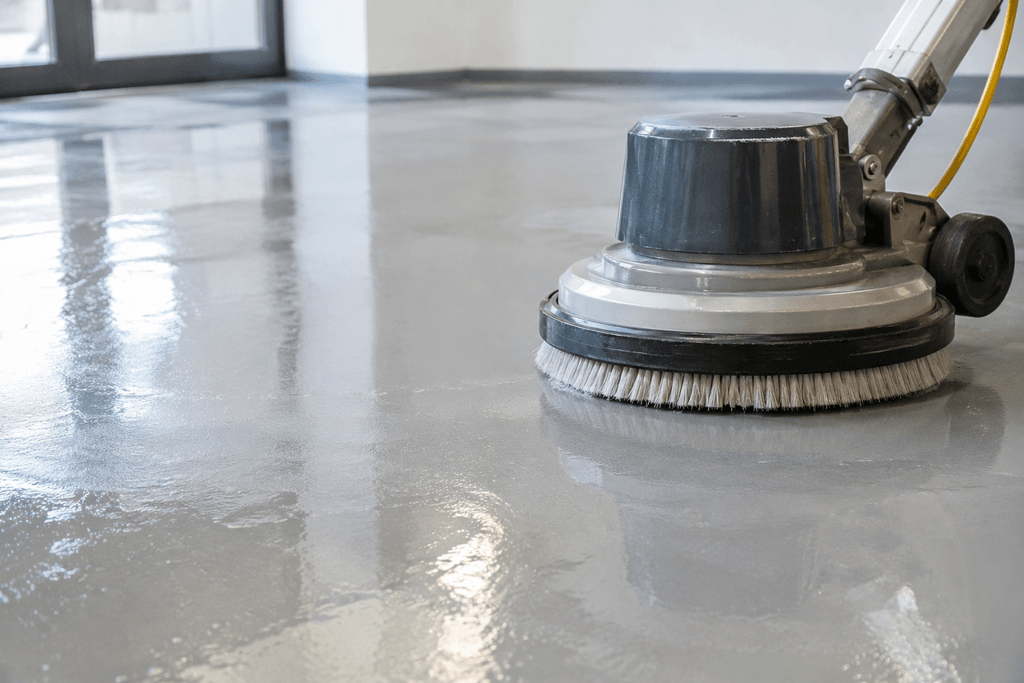
• Brush or scrubbing equipment: Helps agitate the surface and remove dirt, particularly from textured, slip-resistant finishes where contamination can collect in the surface profile.
• Clean water and appropriate cleaning tools: Used as required to rinse the surface and remove any remaining cleaning solution, following the recommended cleaning procedure.
For larger areas, a suitable mechanical scrubber-dryer may offer a more efficient way to apply the cleaning solution, scrub the floor and recover the dirty water in one operation.
Always check the recommendations for your specific resin flooring system before selecting equipment or cleaning chemicals.
Cleaning equipment should be selected according to the size of the area, the degree of soiling and the texture of the floor.
4. Deal with spills and contamination promptly
Spills should be addressed as soon as it is safe to do so. Leaving oil, grease, food residues or other substances on the surface can make cleaning more difficult and may create slip hazards.
The appropriate response will depend on the material involved. Remove the contamination using a method and cleaning agent suitable for the flooring system, following the relevant site procedures and safety requirements.
In industrial environments, some chemicals or process materials may require specialist handling and disposal. Employees should follow the site's spill response procedures rather than treating every spill as an ordinary cleaning task.
Where staining persists, or the surface appears to have changed, seek advice before using stronger chemicals or aggressive cleaning methods.
5. Avoid common resin floor maintenance mistakes
Even a durable flooring system can be affected by inappropriate cleaning practices. To help protect your floor:
• Do not use unapproved chemicals. Strong acids, solvents and other incompatible products may damage certain resin systems.
• Avoid excessive abrasion. The wrong brush or pad can scratch or wear the surface.
• Do not leave cleaning residues behind. Dirty water and chemical build-up can affect the finish and potentially create slip hazards.
• Do not overlook high-traffic areas. Entrances, turning points and heavily used walkways may need more frequent attention.
• Keep cleaning equipment maintained. Dirty brushes, pads and machines can redistribute contamination rather than remove it.
For commercial and industrial sites, cleaning procedures should also account for appropriate personal protective equipment, chemical safety and the safe disposal of contaminated wash water.
6. Inspect the floor as part of your maintenance programme
Cleaning provides an opportunity to identify changes in the floor's condition. During routine maintenance, look for unusual wear, scratches, localised damage, changes in appearance or areas where contamination repeatedly accumulates.
Pay particular attention to heavily trafficked zones and locations exposed to chemicals, impact or mechanical equipment.
Minor issues should not automatically be treated with additional cleaning products or abrasive methods. Where damage is visible, seek advice from a flooring specialist to establish whether repairs or further investigation are required.
The appropriate maintenance requirements will vary according to the resin system, its age and the conditions in which it operates. Follow the manufacturer's guidance for any inspections, repairs or refurbishment.
An effective resin floor maintenance programme combines regular cleaning, suitable products, appropriate equipment and routine inspections. By tailoring these measures to the working environment, businesses can help maintain the appearance and intended performance of their flooring.
Contact us for more information:
At MJF Group, as a specialist flooring contractor, we understand the importance of keeping commercial and industrial resin floors clean and well maintained. Following the correct cleaning methods and using suitable equipment can help preserve your floor’s appearance and performance. If you need advice on resin flooring, maintenance or your next flooring project, contact MJF Group to discuss your requirements.

are you ready for a clean slate? have you got the mjf factor?
At mjf group, our people are one of our company values. We are continuously seeking enthusiastic, reliable and engaged individuals to join our team and grow with us.